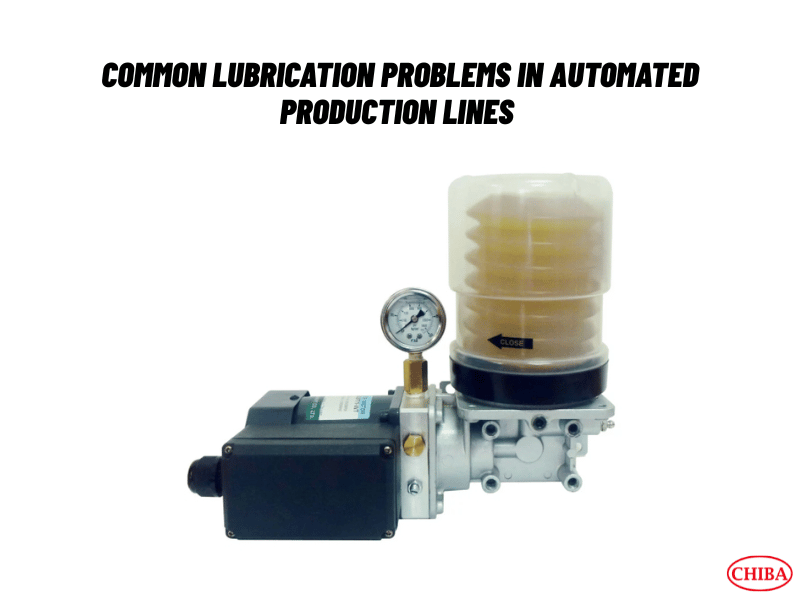
Common Lubrication Problems in Automated Production Lines — How Pressure-Relief Electric Grease Pumps Reduce Waste and Oil Recovery Risks
Introduction: Why Lubrication Strategy Matters in Automated Production Lines
As automated production lines become faster, more compact, and more continuous in operation, lubrication is no longer a simple maintenance task — it is a critical reliability factor. Equipment such as robotic arms, linear rails, transfer tracks, and spray systems operate at high cycle rates and tight tolerances. Any lubrication instability can quickly lead to positioning errors, premature wear, or unexpected downtime.
Traditional lubrication systems that rely on reservoir tanks and continuous-pressure grease delivery often create hidden problems: over-lubrication, oil contamination, grease degradation, and high waste rates. These issues not only increase operating cost but also introduce oil recovery and disposal risks.
To address these challenges, many automation users are shifting toward pressure-relief electric grease pumps combined with disposable grease packs, which provide more precise, cleaner, and more economical lubrication control.
Common Lubrication Problems in Automated Lines
Over-Lubrication and Grease Waste
In conventional tank-type lubrication systems, grease is often delivered under constant pressure or with limited timing control. This can easily result in over-supply, especially in multi-point lubrication networks. Excess grease is pushed past seals or discharged from rail systems, leading to:
- Material waste
- Contamination of nearby components
- Increased cleaning workload
- Higher lubricant consumption cost
In automated environments, even small excess per cycle becomes significant over time.
Oil Recovery and Reused Lubricant Risks
Some facilities attempt to collect and reuse discharged grease or oil. However, recovered lubricant is often contaminated by:
- Metal particles
- Dust and abrasive debris
- Moisture
- Chemical residues
Reintroducing contaminated lubricant reduces lubrication performance and may accelerate component wear instead of preventing it. This creates a hidden reliability risk.
Reservoir Tank Contamination and Maintenance Burden
Traditional grease tanks are opened repeatedly for refilling. This exposes lubricant to air and moisture and increases oxidation risk. Over time, lubricant quality degrades. Tank cleaning is also labor-intensive and often postponed, further increasing contamination probability.
Unstable Line Pressure in Long Lubrication Circuits
Automated systems frequently use long or branched grease lines to serve multiple lubrication points. Without proper pressure control and relief, operators may face:
- Uneven grease distribution
- Line blockage stress
- Residual pressure buildup
- Seal damage or hose fatigue
Pressure instability directly affects lubrication accuracy.
What Is a Pressure-Relief Electric Grease Pump?
A pressure-relief electric grease pump uses a motor-driven gear mechanism to deliver stable grease output with controlled pressure and low noise. Unlike simple constant-pressure pumps, it integrates pressure protection and relief functions to maintain system safety and delivery stability.
Typical functional characteristics include:
- Motor-driven gear pumping for stable output
- Strong discharge pressure capability
- Low operating noise
- PLC-controlled interval and running time
- Optional pressure sensing system
- Overload pressure adjustment valve for motor and line protection
This structure allows more predictable and repeatable lubrication delivery.
How Pressure-Relief Design Reduces Waste and Recovery Risk
PLC-Controlled Intermittent Lubrication
Instead of continuous grease delivery, interval time and running time can be controlled by PLC logic. This allows lubrication to match actual machine cycles and motion frequency.
Benefits include:
- Reduced grease consumption
- More precise dosing
- Lower discharge waste
- Better lubrication consistency
Optional Pressure Sensing Verification
An optional pressure sensing system can detect whether line pressure reaches the required standard during each lubrication cycle. This helps verify that grease is actually delivered to the lubrication point rather than lost due to leakage or blockage.
This reduces both under-lubrication risk and blind over-supply.
Pressure Overload and Relief Protection
An adjustable pressure overload valve protects both the motor and the lubrication tubing. Pressure-relief behavior prevents long-term residual pressure buildup in grease lines, which helps:
- Protect seals and hoses
- Reduce leakage risk
- Prevent forced grease extrusion
- Extend system life
Disposable Grease Packs vs. Traditional Reservoir Tanks
One major upgrade trend in automation lubrication systems is the use of disposable grease packs instead of refillable tanks.
Key Advantages of Disposable Grease Packs
- No open tank contamination
- No oil mixing between batches
- No tank cleaning requirement
- Lower waste generation rate
- No reused recovered grease
- More consistent lubricant quality
- Reduced handling exposure
Because grease is supplied in sealed packs, oxidation and contamination risks are significantly reduced.
Supported Grease Grades and Efficiency
Pressure-relief electric grease pumps can typically support:
- NLGI 00# grease
- NLGI 0# grease
- NLGI 1# grease
This range covers semi-fluid to standard grease types, allowing users to balance:
- Flowability
- Lubrication film strength
- Pumping efficiency
- Economic performance
Selecting the correct grease grade ensures both lubrication effectiveness and system efficiency.
Typical Automation Applications
Robotic Arms and Multi-Axis Systems
Robotic joints and guide mechanisms operate under frequent motion cycles and require precise lubrication. Intermittent, pressure-verified grease delivery improves reliability and reduces excess discharge around joints.
Rail and Linear Guide Lubrication
Track systems and linear guides often involve distributed lubrication points. Stable pressure output and pressure-relief protection help maintain even grease distribution across long lines.
Spray and Coating Equipment
Spray and coating environments require clean operation and contamination control. Disposable grease packs and non-recovery lubrication approaches reduce cross-contamination risk and support cleaner maintenance practices.
Operation and Maintenance Notes
- Always fill grease through the designated oil hole
- Avoid non-vacuum filling conditions that degrade lubrication performance
- Use correct grease grade (00#, 0#, or 1# as specified)
- Set PLC interval and running time according to machine duty cycle
- Verify pressure using the optional sensing system when precision delivery is required
About CHIBA / YUNG TIEN Lubrication Technology Co., Ltd.
CHIBA (YUNG TIEN Lubrication Technology Co., Ltd.) is a Taiwan-based manufacturer specializing in centralized lubrication systems, grease pumps, oil lubrication units, and automation lubrication solutions. With decades of industry experience, CHIBA focuses on reliable pump design, stable pressure control, and practical lubrication technologies for automated machinery, production lines, and precision equipment. Our product range covers electric grease pumps, pressure-relief lubrication pumps, oil and grease lubrication systems, and related accessories for industrial applications.
Call to Action
If you are looking to reduce grease waste, eliminate oil recovery risks, and improve lubrication reliability in your automated production line, our engineering team can help you select the right pressure-relief electric grease pump and lubrication configuration for your system.
Contact us today to discuss your application and lubrication system requirements.